Cooking Technique
How to Keep Coconut Milk From Splitting in Curry
A calm, practical guide to choosing coconut milk, controlling heat and building a smooth Thai curry sauce at home.
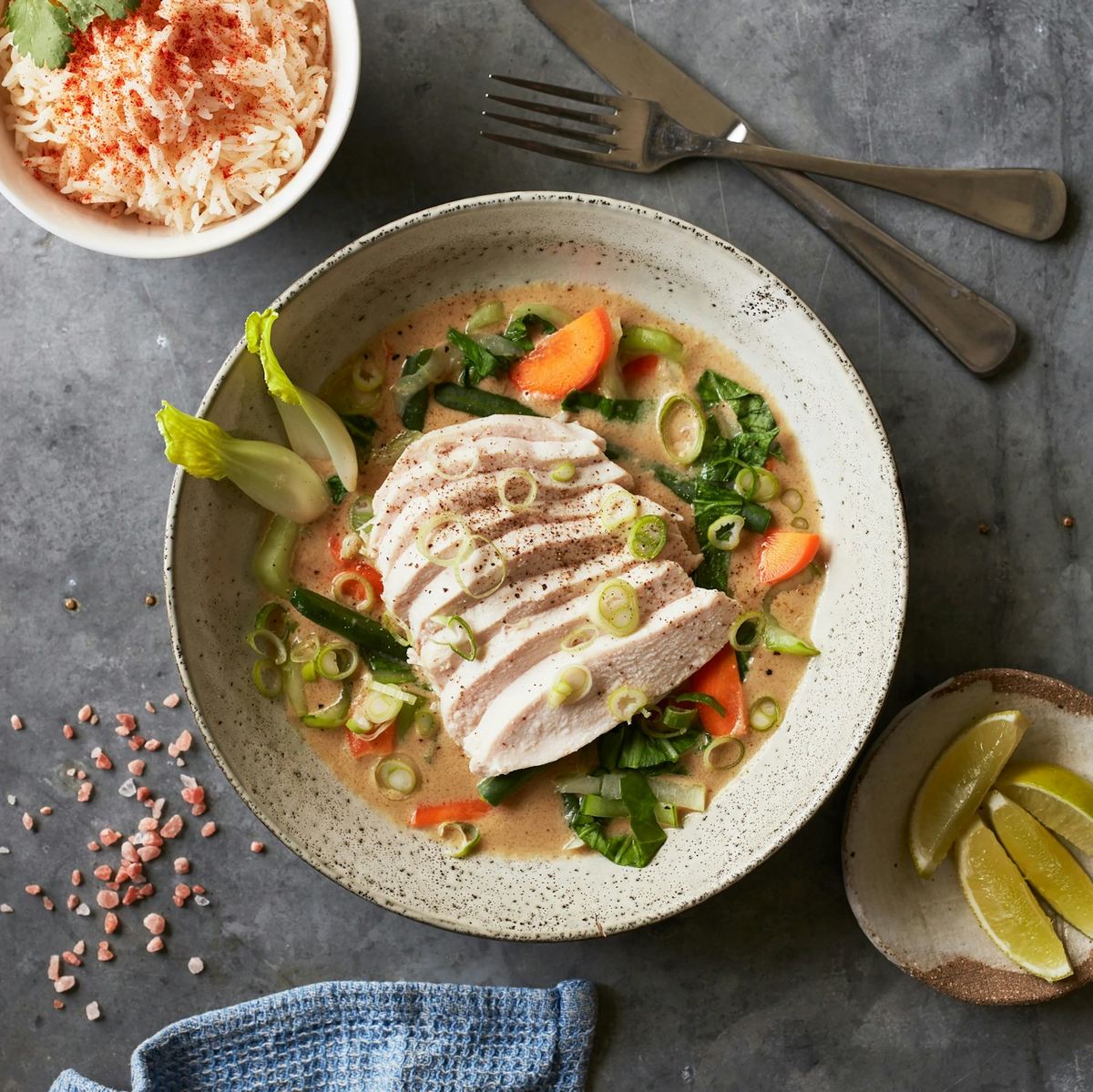
By Sawadee Masala Kitchen · 6 min read
First, know what “split” means
Coconut milk is an emulsion of fat and water. Strong heat, long boiling or sudden temperature changes can separate those parts, leaving visible oil droplets or a grainy-looking sauce.
In Thai cooking, a small amount of oil separating from coconut cream is not always a mistake. Traditional curry paste is often fried in thick coconut cream until its oil begins to show. The problem is uncontrolled separation that leaves the final sauce thin, greasy or curdled-looking.
Choose coconut milk made for cooking
Full-fat canned coconut milk usually gives a more stable, satisfying curry than a refrigerated coconut drink designed for pouring. Coconut drinks contain more water and may include ingredients chosen for drinking rather than simmering.
Shake the can before opening if the recipe calls for evenly mixed milk. If you want to fry curry paste in the thick cream, do not shake it; spoon the solid layer from the top first, then add the thinner liquid later.
- Use full-fat coconut milk for the creamiest sauce.
- Check that coconut is one of the main ingredients.
- Avoid vigorous boiling once the sauce is combined.
Control the heat
Bring the curry to a gentle simmer rather than a rolling boil. Once the coconut milk is in the pan, medium-low heat is usually enough. Stir from the bottom occasionally, especially if the pan is thin or the curry contains a dense paste that can catch.
Add ingredients in the right order
Cook the curry paste until fragrant before adding most of the coconut milk. Then add firm vegetables or proteins that need time to cook. Quick-cooking vegetables, fresh herbs and lime should come later.
Acidic ingredients can make an emulsion less stable. Add lime juice or tamarind near the end, after the sauce is no longer boiling hard. This also preserves their fresh flavour.
Can a split curry be rescued?
Take the pan off the heat and stir gently. A splash of warm water or coconut milk can help bring an over-reduced sauce back together. Do not add ice-cold liquid to a fiercely hot pan, because the temperature shock may make the texture worse.
If the curry tastes good but shows a few orange or green oil droplets, it may not need fixing. That coloured oil has absorbed flavour from the curry paste and can be part of the intended appearance.
A reliable home-cooking sequence
- Warm the pan over medium heat.
- Cook the curry paste in coconut cream or a small amount of oil until fragrant.
- Add coconut milk gradually and stir until combined.
- Simmer gently while the main ingredients cook.
- Finish with delicate herbs, lime and final seasoning away from fierce heat.
Frequently Asked Questions
Why does my coconut curry look oily?
Some oil release is normal, especially when curry paste has been fried in coconut cream. It becomes a problem only when the sauce tastes greasy, watery or unpleasantly grainy.
Can I use light coconut milk?
Yes, but the sauce will be thinner and may feel less rich. Because light coconut milk contains more water, reduce it gently rather than boiling hard.
Should coconut milk be stirred constantly?
No. Gentle, occasional stirring is enough for most curries. Constant vigorous stirring is unnecessary; temperature control matters more.