Cooking Technique
Tadka Explained: How to Bloom Spices Without Burning Them
Learn when to add whole spices, ground spices and aromatics for a fragrant tadka that lifts dal, khichdi and everyday Indian home cooking.
By Sawadee Masala Kitchen · 6 min read
What tadka does
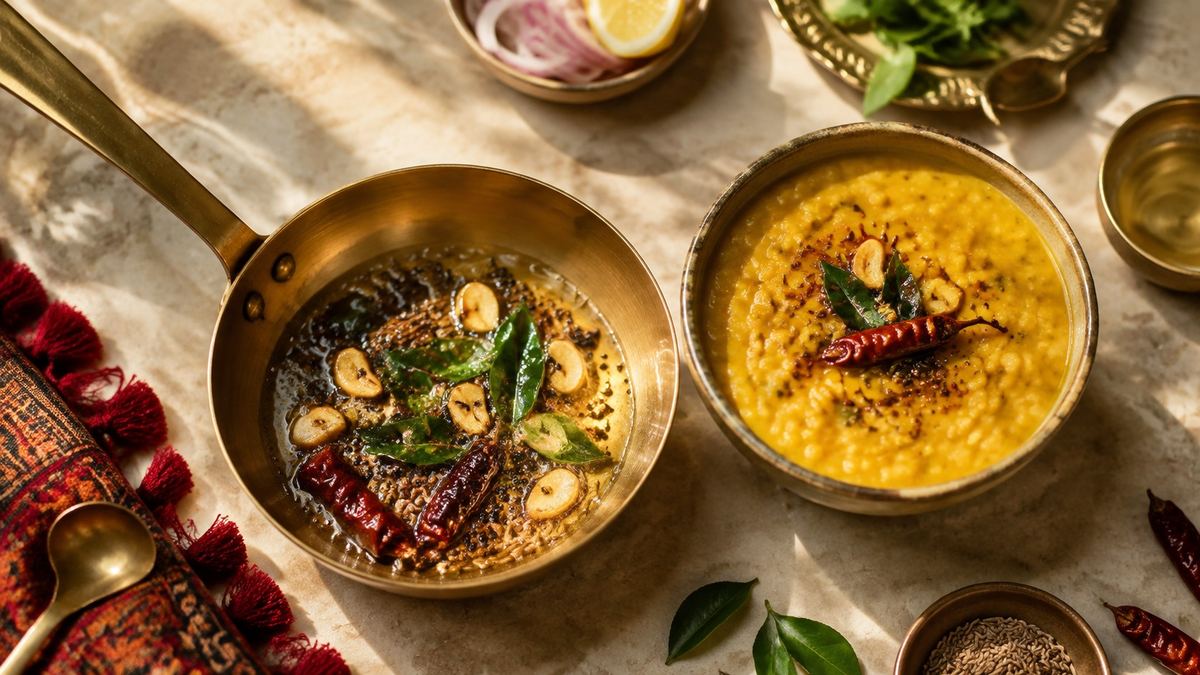
Tadka—also called tempering—is the brief cooking of spices and aromatics in fat. The hot fat carries their aroma through a finished dish, whether the tadka forms the first layer of cooking or is poured over dal just before serving.
The goal is fragrance, not darkness. Each ingredient has a different cooking speed, so a calm sequence matters more than extreme heat.
Choose the fat and pan
Use a small, dry pan with enough room for the ingredients to move. Ghee gives a rounded, nutty character; a neutral cooking oil keeps flavours lighter. Choose a fat suitable for the heat you plan to use.
Keep a lid nearby and make sure wet utensils never touch hot fat. Water can cause sudden splattering.
- Measure every ingredient before heating the pan.
- Keep the finished dal or khichdi ready if the tadka will be poured on top.
- Use moderate heat and adjust by sight, sound and aroma.
Add ingredients in the right order
Start with sturdy whole spices such as cumin or mustard seeds. Once they become aromatic and begin to sizzle, add dried chillies and curry leaves carefully. Fresh aromatics such as sliced garlic, ginger or onion follow because they contain moisture and need a little longer to soften.
Ground spices can scorch quickly. Lower the heat before adding chilli powder, turmeric or other fine powders, stir briefly, and immediately add the tadka to the dish or introduce the next moist ingredient.
- Whole seeds first
- Dried chillies and sturdy leaves next
- Fresh aromatics after the seeds are fragrant
- Ground spices last, with lower heat
Finish dal or khichdi with confidence
Taste the base dish for salt and consistency before adding the tadka. Pour the hot mixture over the dish carefully, then cover briefly to hold the aroma before stirring.
Serve soon after finishing. For a gentler result, use fewer chillies rather than shortening the cooking time for the spices.
Frequently Asked Questions
Can I make tadka with oil instead of ghee?
Yes. A neutral cooking oil works well and gives a lighter flavour. Use ghee when you want its richer aroma and dairy is suitable for everyone eating the dish.
Why does my tadka taste bitter?
The heat was probably too high or a spice cooked for too long. Ground chilli and other powdered spices burn especially quickly, so lower the heat and add them near the end.
Can tadka be made in advance?
It is most aromatic when used immediately. You can prepare and measure the ingredients ahead, then cook the tadka just before serving.